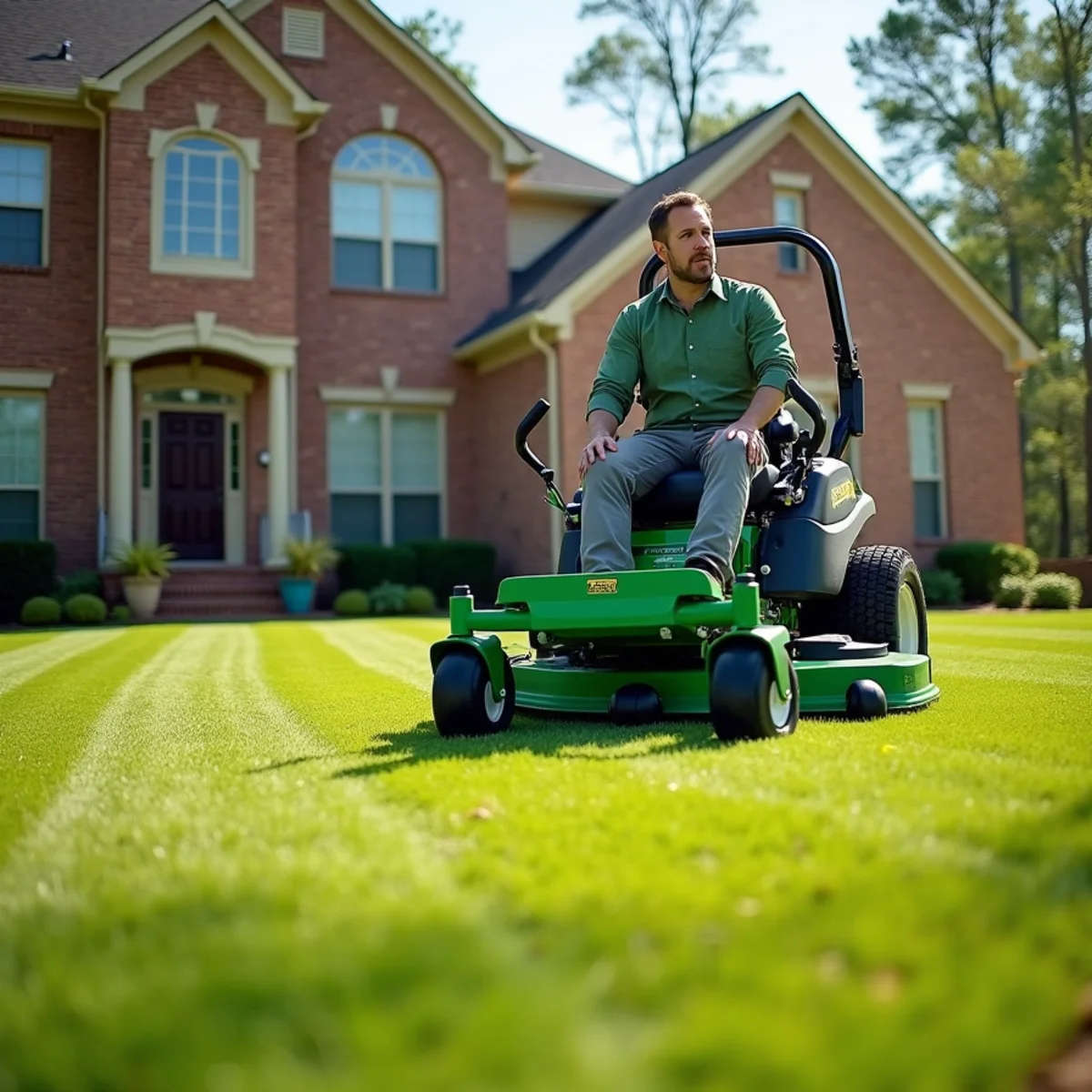
Top Lawn Care & Precision Mowing in Deatsville, AL
A great lawn in the River Region is earned, not mowed on autopilot. Central Alabama pushes more than 54 inches of rain across a growing season, and our warm-season turf responds fast, so a yard that looked tidy on Monday can outgrow itself by the weekend. Truvian Lawn Care builds every mowing plan around the grass you actually have, cutting bermuda, zoysia, centipede, St. Augustine, and fescue at the height each one wants instead of running a single deck setting across every property in Deatsville.
The details are where a lawn lives or dies. We keep blades sharp so grass is sheared clean rather than torn and browned, we never scalp more than a third of the blade in one pass, and we vary our mowing direction to keep the turf standing upright instead of laying over into ruts. Edges get defined along drives and beds, string-trimming is kept off tree trunks, and clippings are managed so thatch does not smother your root zone during our humid summers.
Because we are based right here in Elmore County, we mow on a rhythm that matches the season instead of a rigid calendar. Spring and early summer flushes get tighter intervals, late summer heat gets a slightly higher cut to protect the crown, and fall gets a gradual step-down. It is steady, grass-specific care from a crew that knows how a Deatsville yard behaves from March through the first frost.
Signs You Need This Service
Grass outrunning your mower
Warm-season turf and 54 inches of annual rain mean explosive spring and summer growth. If you skip a week the lawn gets shaggy, clumps when cut, and stresses out. A steady service keeps it on the right side of the one-third rule.
Brown, ragged tips after mowing
Dull blades tear grass rather than slicing it, leaving frayed tips that brown out and invite disease in humid weather. Sharp equipment and the correct cutting height for your species keep the lawn green instead of scorched-looking.
Scalped spots and mower ruts
Cutting too low or mowing the same line every week thins the crown and carves ruts into soft, clay-heavy ground. Varied patterns and species-matched heights protect the turf and keep the surface even underfoot.
No time to keep up
Between work, family, and Alabama heat, weekly mowing is the chore that never ends. A reliable local crew handling the cut, edge, and trim frees your weekends while keeping the yard looking cared-for all season.
Our Process
1
Walk-through and height plan
We identify your turf type, check for thin or shaded areas, and set a mowing height that suits bermuda, zoysia, centipede, or fescue. That target height guides every visit so the lawn is cut for health, not just tidiness.
2
Sharp-blade mowing
Each visit starts with clean, sharp blades. We shear the grass rather than tear it, hold to the one-third rule, and alternate direction week to week so the turf stands tall and avoids the rutting that plagues soft clay soil.
3
Edging and detail trimming
Driveways, walkways, and bed lines get crisp mechanical edging, and we string-trim around obstacles without scarring tree bark. The finished border is what makes a mowed lawn read as genuinely maintained.
4
Clipping and debris management
We mulch clippings back when they feed the soil and collect them when heavy growth would clump and smother. Hard surfaces are blown clean so no grass is left staining drives, walks, or the street.
5
Seasonal interval tuning
We tighten intervals during the spring flush, raise the cut a notch through peak summer heat to protect the crown, and step growth down into fall. Your schedule flexes with the season instead of ignoring it.
Need Lawn Care in the River Region?
Call (323) 606-0255 for a free, no-pressure estimate — or send the form and we’ll follow up fast.
Through the spring and summer flush, most Central Alabama lawns need weekly mowing to stay within the one-third rule, since our heat and 54 inches of rain drive fast growth. As things slow in fall we stretch the interval. We set a rhythm around your specific grass rather than a fixed calendar.
It depends on the species. Bermuda and zoysia are cut lower, centipede and St. Augustine sit higher to protect the crown, and fescue is kept taller for heat tolerance. We confirm your turf during the first visit and hold that height so the lawn is mowed for long-term health.
Both, depending on conditions. Light clippings get mulched back to feed the soil, but during heavy growth we bag so clumps do not smother the turf or build thatch in humid weather. Either way we blow every hard surface clean before we leave.
Yes. We bring badly overgrown yards back gradually rather than scalping them in one pass, which would shock the turf. It may take two staged cuts a few days apart. Call (323) 606-0255 and we will look at it and set a recovery plan.
Both. Recurring weekly or biweekly service keeps your Deatsville lawn healthiest and usually costs less per visit, but we also handle one-time and vacation cuts. If you want us on a set rhythm through the growing season, call (323) 606-0255 and we will build a schedule around your grass.
Not much, but a quick pass helps. Clear toys, hoses, pet waste, and stray branches so nothing gets thrown or damaged, and flag hidden sprinkler heads, pet stakes, or invisible-fence wire. On rainy weeks we may shift a day to avoid rutting your soft clay soil, and we will keep you posted.
Centipede, bermuda, and zoysia each suit a different Central Alabama lawn. This honest comparison helps you pick the grass that fits your yard and your effort.
Our crews roll out of Deatsville (ZIP 36022) across Elmore and Autauga counties every day. That local base means faster arrivals, real accountability, and a team that understands River Region soil, slopes and storms.