Every landscaping decision you make, from which grass to plant to where the water goes, ultimately answers to one thing you rarely think about: your soil. In Central Alabama, the ground beneath your feet is not uniform. Drive from a hilltop in Elmore County down toward a river bottom and you can cross three distinct soil worlds in a few miles, each demanding a different approach.
Understanding which soil you have is the foundation of a landscape that works with your property instead of fighting it. This guide covers the three soil types that dominate the region, heavy red clay, river alluvium, and sandy loam, what each means for your lawn and beds, and how to work with the ground you actually have.
Heavy Red Clay: The Regional Default
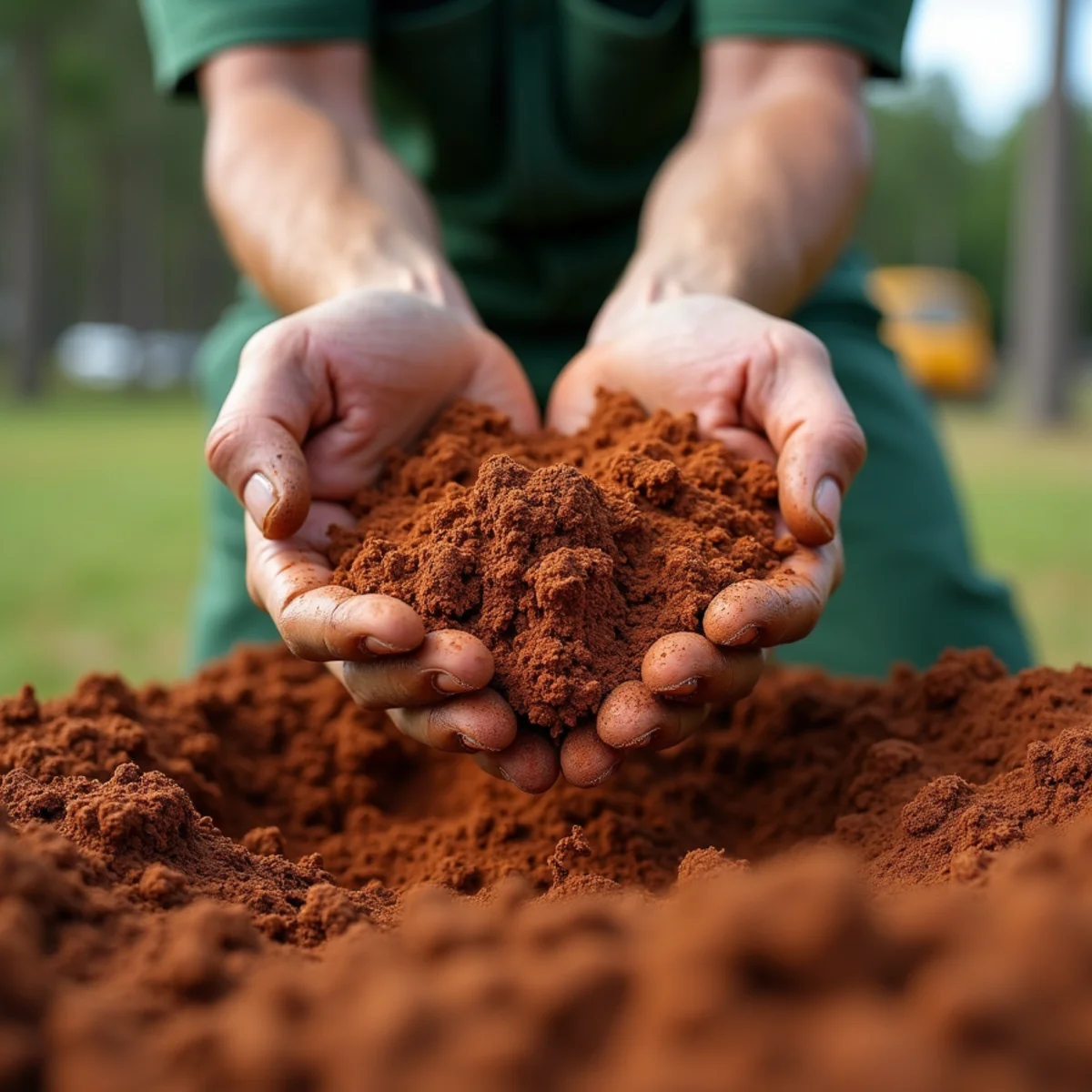
For most homeowners across Elmore County and the wider River Region, red clay is the reality. Its distinctive color comes from iron oxides, and its behavior comes from its structure: microscopic, tightly packed particles with almost no space for water or air to move. That single fact explains nearly every clay challenge.
Clay drains poorly, so water sheets across the surface and pools in low spots, which is why drainage work is so common here. It compacts easily under foot traffic and equipment, choking roots. And it swells when wet and shrinks when dry, heaving whatever sits on it. But clay is not all bad: it holds nutrients well and, once managed, grows excellent turf.
- Watch for: poor drainage, standing water, compaction, and erosion on slopes.
- Work with it by: improving drainage, aerating to relieve compaction, and choosing clay-tolerant grasses.
- Common fixes: french drains, catch basins, regrading, and core aeration.
Clay's drainage struggles are exactly why we install so many french drain and catch basin systems, and why aeration is such a valuable service on these soils.
River Alluvium: Rich but Wet
Closer to the Alabama, Coosa, and Tallapoosa river systems and their creeks, and near water bodies like Jordan Lake, you find alluvial soils, ground deposited by flowing water over long stretches of time. These soils are often deep and fertile, a genuine gift for growing, but they come with their own catch: they frequently sit in low, flat areas that flood and drain slowly.
Alluvial soil can vary a lot even within one lot, layering sand, silt, and clay depending on how the water laid it down. For a homeowner, the practical implications are that plants often grow vigorously here, but drainage and occasional flooding must be planned for, and the soil's variability means what works in one corner of the yard may not work in another.
- Watch for: seasonal wetness, flooding in low areas, and inconsistent soil within one property.
- Work with it by: planning drainage for wet zones and choosing plants that tolerate periodic moisture.
- The upside: fertility that supports strong, healthy growth once water is managed.
Sandy Loam: The Easy Grower
In some pockets of Central Alabama, particularly certain uplands and areas with more weathered parent material, you find sandy loam, a friendlier blend of sand, silt, and a little clay. This is the soil most gardeners dream of: it drains well, resists compaction, and is easy to dig and plant. Roots breathe and spread happily.
The trade-off is that sandy loam's good drainage also means it holds water and nutrients less well than clay, so lawns and beds in sandy loam may need more frequent watering during our dry summer stretches and more attentive fertilizing. It is a wonderful soil, but it is not maintenance-free; it simply trades clay's drainage problems for a need to retain moisture and nutrients.
- Watch for: faster drying in summer heat and nutrients leaching away.
- Work with it by: adding organic matter to boost retention and watering and feeding a bit more attentively.
- The upside: excellent drainage, easy planting, and strong root health.
Why a Soil Test Is Worth It
Because these soils blend and layer, guessing is a poor strategy. A simple soil test, inexpensive and quick, tells you your soil's texture, pH, and nutrient levels, which in turn tells you what to plant, how to feed, and where drainage is needed. Fall is a good time to test, when you can also check for compaction and thin turf. It is one of the highest-value, lowest-cost steps a homeowner can take.
Matching Landscape to Soil
Once you know your soil, the decisions get easier. Clay-heavy lots benefit from drainage-first thinking and grasses that tolerate wet feet. Alluvial lots reward plants that handle occasional flooding and a plan for the wet zones. Sandy loam invites almost anything as long as you keep moisture and nutrients up. And on any soil, the right grass choice flows from these realities, which is why we tie soil to turf selection in our sod installation and turf renovation work.
Work With Your Ground, Not Against It
The most successful Central Alabama landscapes start by respecting the soil underneath them. Whether you are on heavy red clay, rich river alluvium, or friendly sandy loam, knowing your ground lets you drain it, plant it, and feed it correctly. Truvian Lawn Care reads the soil on every project across Elmore County, Autaugaville, and the River Region before we recommend a thing. Call (323) 606-0255 for a soil-smart plan for your property.
Related from Truvian Lawn Care