For any commercial property, a walkway is more than a path; it is a liability the moment it becomes unsafe. Slip-and-fall incidents are among the most common and costly claims a business or property owner faces, and the walkways that cause them are usually the ones no one was watching until someone went down. In Central Alabama's wet, humid climate, the conditions that make surfaces slick develop faster than many owners expect.
The encouraging news is that most walkway hazards are preventable with attention and maintenance. This guide covers the specific dangers that develop on commercial concrete and paver walkways in our climate, and the practical steps property owners in Montgomery, Hoover, and across the region can take to keep pedestrians safe and liability low.
Why Central Alabama Is Hard on Walkways
Our climate is the walkway's quiet adversary. Abundant rainfall keeps surfaces wet often, humidity and shade encourage the growth of algae and mildew that turn concrete and pavers dangerously slick, and the same clay that undermines patios can heave and settle walkways into trip hazards. Add heavy pedestrian traffic on a commercial site and small problems compound quickly.
Recognizing that the climate is actively working against your walkways reframes maintenance from optional tidying to genuine risk management. A surface that was fine last year can grow a slick biofilm or develop a settled, lifted joint over a single wet season.
The Main Hazards to Watch
Most walkway incidents trace to a handful of preventable conditions:
- Algae, mildew, and biofilm: the greenish or blackish slick film that grows in damp, shaded areas and becomes treacherous when wet.
- Standing water and poor drainage: puddles that pond on the walking surface, both a slip hazard and a freeze risk on rare cold snaps.
- Uneven surfaces: settled or heaved concrete slabs and lifted pavers that create trip edges.
- Cracks and spalling: broken concrete and gaps that catch heels and toes.
- Loose or missing pavers and worn, gap-filled joints.
- Poor lighting that hides all of the above from pedestrians at night.
Keeping Surfaces Clean and Slip-Resistant
The most common commercial walkway hazard in our climate is the invisible one: the algae and biofilm that grow in damp, shaded stretches. Regular cleaning, appropriate to the surface, removes that film and restores traction. Pressure washing done correctly on concrete and pavers clears organic growth, and keeping the surface clean is often the single highest-impact safety step on a shaded commercial walkway.
For paver and concrete surfaces, appropriate sealing can add slip resistance and make the surface easier to keep clean, though the right product and finish matter, since some sealers can actually reduce traction if wrongly specified. The goal is a surface that sheds organic growth and grips underfoot even when wet. Our paver patio and walkway installation experience informs how we assess and treat existing commercial walkways for safety.
Fixing Drainage That Pools on the Path
Standing water on a walkway is both a direct slip hazard and a sign of a drainage problem that will keep recurring. Water should shed off the walking surface, not collect on it. Where a walkway ponds, the fix is usually a combination of correcting the surface slope and addressing the drainage around it so water is carried away. Persistent pooling often calls for a proper drainage solution, the same french drain and catch basin thinking we apply across commercial sites, so the path stays dry after every rain.
Repairing Trip Hazards Promptly
Uneven surfaces are the classic trip-and-fall culprit, and on our clay, walkways settle and heave over time. A lifted paver or a settled slab that creates even a small vertical edge is enough to catch a toe. Prompt repair, resetting settled pavers, addressing the base that let them move, and fixing cracked or spalled concrete, closes the hazard before it becomes a claim. As with patios, a walkway that keeps settling usually has a base or drainage problem underneath that should be corrected, not just patched.
Documentation and Regular Inspection
For a commercial property, a routine inspection schedule for walkways is both a safety practice and a liability shield. Regularly walking the paths, noting and dating hazards, and documenting the corrective work demonstrates that the owner took reasonable care, which matters enormously if an incident ever leads to a claim. A property that can show a consistent maintenance record is in a far stronger position than one that cannot.
- Inspect walkways on a regular schedule, especially shaded and high-traffic stretches.
- Document hazards and the date they were found and corrected.
- Prioritize slick growth, standing water, and trip edges near entrances.
- Keep walkway lighting functional so hazards are visible after dark.
- Fold walkway safety into the property's overall grounds maintenance.
Make Walkway Safety Part of the Routine
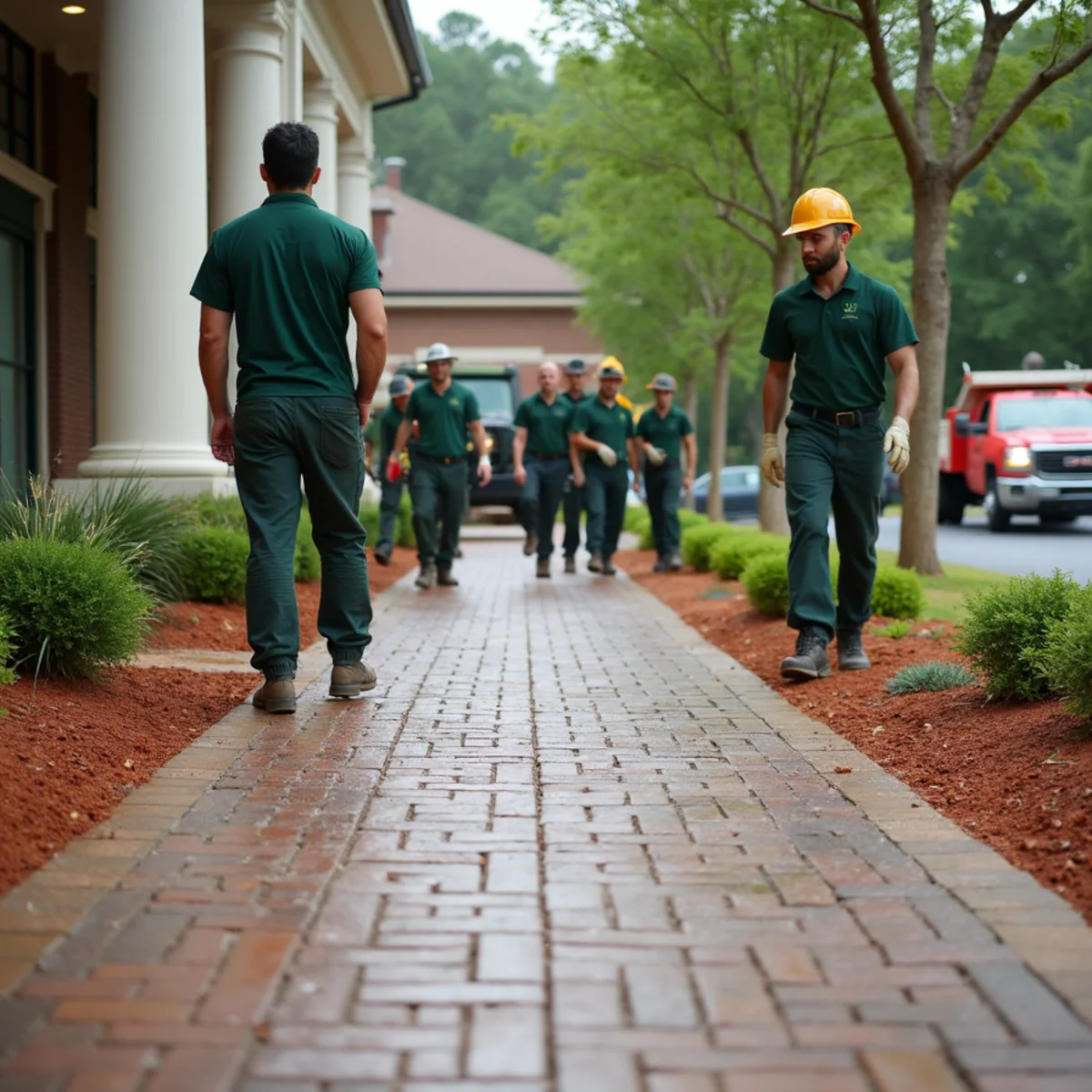
The most effective approach ties walkway safety into ongoing grounds care rather than treating it as a separate, occasional task. When the crew maintaining a property is also watching the walkways, cleaning off growth, flagging a lifted paver, noting a pooling spot, hazards get caught early and consistently. That is how our commercial grounds maintenance program keeps commercial sites both attractive and safe.
Protect Your Pedestrians and Your Property
Slip-and-fall incidents on commercial walkways are common, costly, and largely preventable with cleaning, drainage, prompt repair, and documented inspection, especially in Central Alabama's wet climate. Do not wait for a fall to take your walkways seriously. Truvian Lawn Care assesses, cleans, repairs, and maintains commercial walkways for safety across Montgomery, Hoover, and the River Region. Call (323) 606-0255 to make your walkways safer today.
Related from Truvian Lawn Care