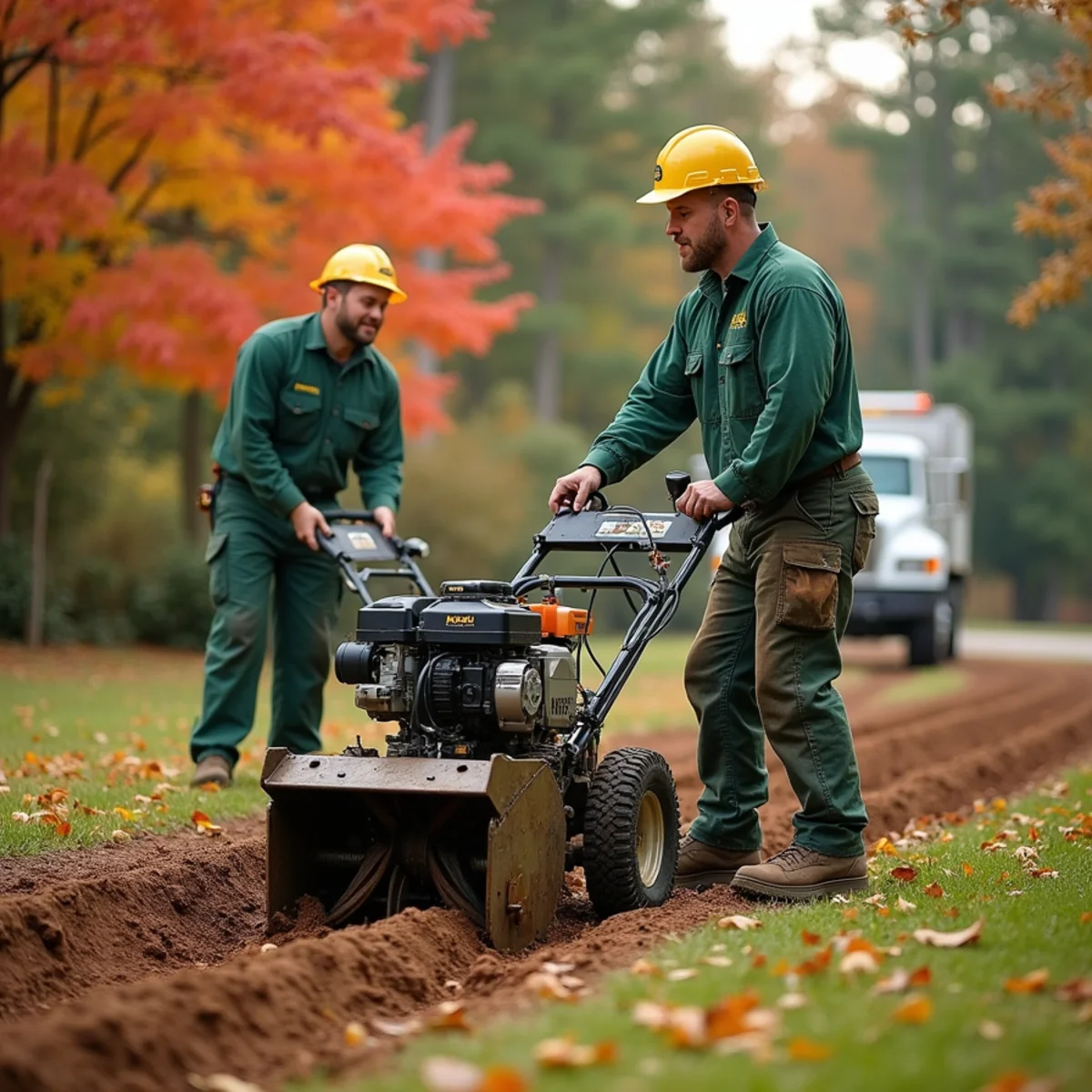
Central Alabama's red clay is a beautiful, stubborn material. It grows healthy turf when managed, holds a slope until it does not, and then, in a single heavy rain, lets go and slides. Homeowners in Wetumpka and Deatsville know the pattern: a hillside that looked stable for years suddenly develops bare patches, then rills, then a full washout that carries soil into the yard, the drive, or against the house.
A concrete block retaining wall is the classic solution, and a good one. But a retaining wall is not just a stack of blocks holding back dirt. On red clay, a wall is fundamentally a water-management structure, and the walls that fail almost always fail for the same reason. This guide explains how to build one that actually holds.
Why Red Clay Slopes Erode
Erosion is water doing work. On a slope, rainfall gains speed as it runs downhill, and moving water picks up and carries soil particles. Red clay compounds the problem two ways. First, because it absorbs water so poorly, more rain runs across the surface where it can erode. Second, when clay does saturate, it becomes heavy and slick, and a saturated clay slope can shear and slide under its own weight.
So a slope in the River Region faces a one-two punch: surface erosion from fast runoff and mass movement from saturation. A retaining wall that addresses only the first, by holding soil, without addressing the second, by managing water, is a wall on borrowed time.
Why Walls Fail, and How to Prevent It
When a retaining wall leans, bulges, or collapses, the culprit is almost always water pressure behind it. Water that collects in the soil behind a wall exerts enormous hydrostatic force, and if it cannot escape, it pushes the wall over. The blocks are rarely the problem; the trapped water is. That is why every wall we build starts with drainage, not blocks.
How a Wall That Lasts Gets Built
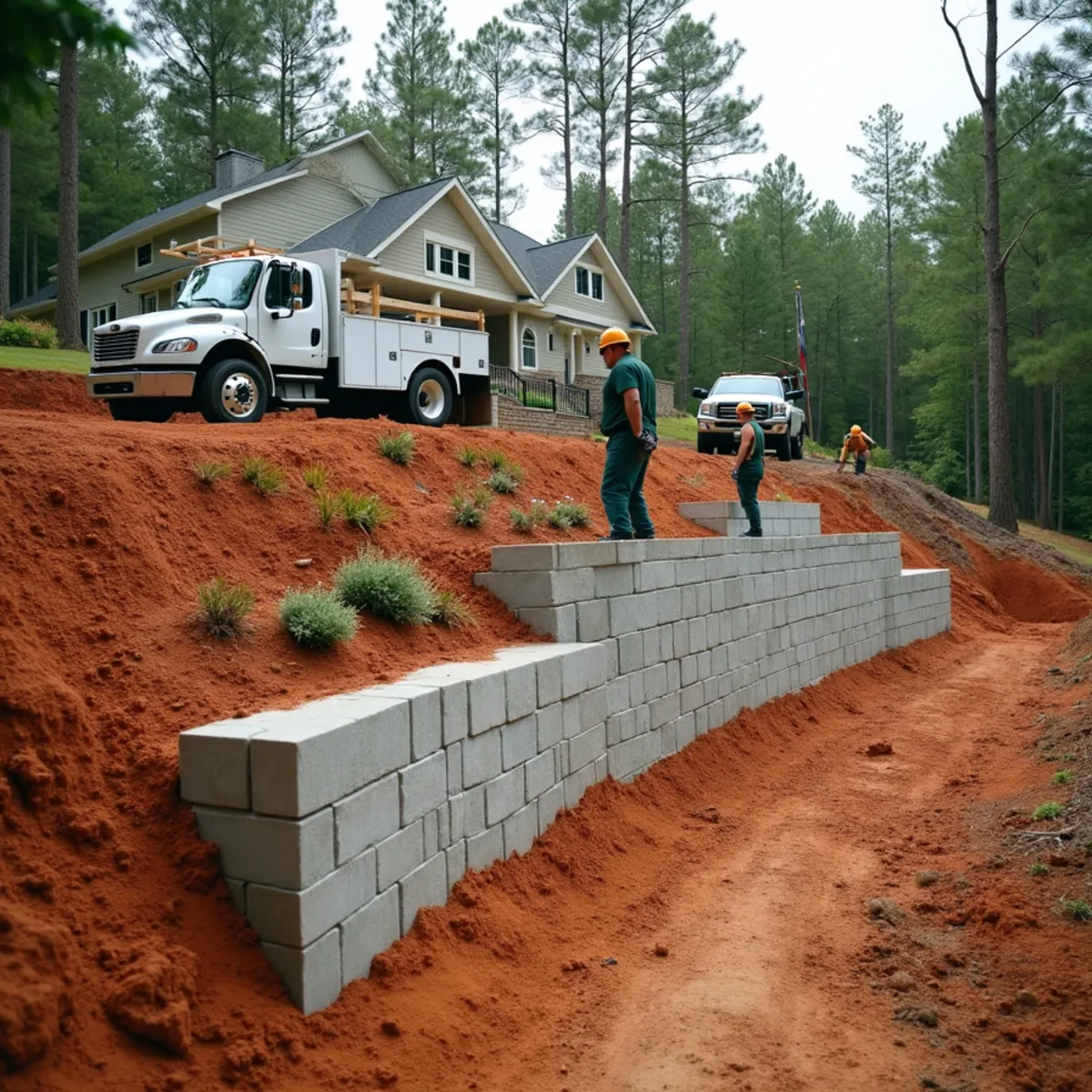
Our concrete retaining wall block construction follows a sequence designed for our soil, and skipping any step is how walls end up rebuilt:
- Excavate a proper base trench, deeper than homeowners expect, cutting into stable soil below the loose surface clay.
- Build a compacted, level base of angular crushed stone; this footing carries the entire wall and must not settle.
- Set the first course dead level, because every error here multiplies up the wall.
- Lay each course with proper setback so the wall leans slightly into the slope for added stability.
- Backfill behind the wall with free-draining gravel, not the native clay, wrapped in filter fabric to keep clay from clogging it.
- Install a perforated drain pipe at the base of that gravel to carry collected water to a safe outlet.
- Cap the wall and reshape the slope above so surface water is directed, not dumped, over the top.
The gravel backfill and drain pipe are the parts a homeowner never sees and a cut-rate installer is tempted to skip. They are also the parts that determine whether the wall survives its first wet Alabama spring.
Tiering Tall Slopes
On steep or tall hillsides, one high wall is not always the best answer. A single tall wall carries tremendous load and may require engineering and reinforcement. Often a better solution is to tier the slope into two or more shorter walls with planted terraces between them. Tiering breaks the load into manageable steps, creates usable planting space, and slows water as it steps down the hill. It frequently looks better, too.
Pairing Walls With Broader Drainage
A retaining wall handles the slope it holds, but the water it collects has to go somewhere, and the water coming from above has to be managed before it ever reaches the wall. On complex lots we integrate walls with a broader plan, sometimes tying wall drains into a french drain and catch basin system, so the whole property sheds water predictably. And where a washout has already started, our emergency drainage washout repair crews can stabilize the slope before building the permanent wall.
Beyond Function: Walls That Look Right
A retaining wall is a permanent, visible feature, so it should look intentional. Modern concrete blocks come in a range of textures, colors, and profiles that can complement your home and turn a raw eroding bank into a finished, terraced landscape. The best walls solve the engineering problem invisibly and read as a designed feature, not a repair.
Hold Your Hillside for Good
A red clay slope will keep eroding until something manages both the soil and the water, and a properly built concrete block retaining wall does exactly that. The secret is not the blocks; it is the base and the drainage behind them. Truvian Lawn Care designs and builds retaining walls engineered for Central Alabama clay throughout Wetumpka, Deatsville, and the River Region. Call (323) 606-0255 for a free assessment of your slope.
Related from Truvian Lawn Care