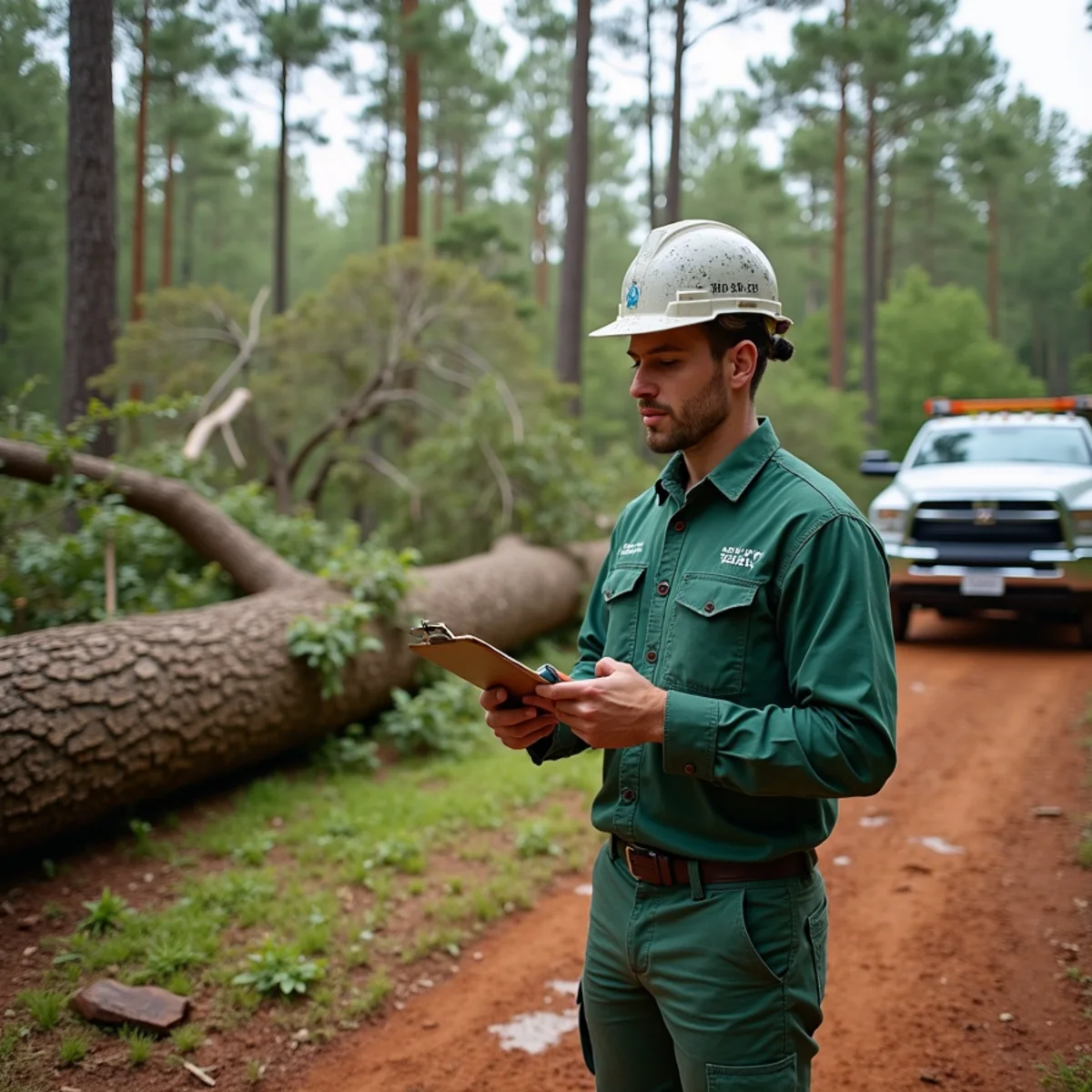
After a storm drops a towering loblolly pine on your property, the second question, right after is everyone safe, is usually who pays for this. Tree removal and repair can be a significant expense, and Central Alabama homeowners understandably want to know whether their policy will cover it. The honest answer is that it depends, and the details matter more than most people expect.
This guide explains how homeowners insurance generally treats storm-fallen trees, what typically is and is not covered, and, most importantly, the steps you should take to give yourself the best chance at a smooth claim. One note up front: we are landscapers and tree-removal professionals, not insurance agents. Always confirm the specifics with your own carrier and policy.
The General Rule: Coverage Follows Damage
As a broad principle, homeowners policies are more likely to help with tree removal when the fallen tree has damaged a covered structure. If a pine falls and crushes part of your roof, your carport, or a fence, the policy that covers that structure often also covers a reasonable amount for removing the tree to make repairs. The removal is treated as part of getting your property back to normal.
By contrast, when a tree falls and hits nothing, dropping harmlessly in the open yard, many policies will not pay to haul it away, because there is no covered damage to repair. Cleanup of a tree that only landed on the ground is frequently the homeowner's responsibility. Every policy is different, so this is a starting expectation, not a guarantee.
What Usually Helps or Hurts a Claim
Several factors tend to influence how carriers view a storm tree claim in Alabama:
- What the tree hit: damage to a covered structure generally strengthens the case for removal coverage.
- The cause: a sudden storm or wind event is usually treated as a covered peril, while gradual causes may not be.
- The tree's prior health: a tree that was visibly dead or neglected can invite a maintenance argument from the adjuster.
- Your documentation: clear, dated photos before cleanup make the claim far easier.
- Your deductible: if removal cost falls below your deductible, a claim may not be worthwhile.
This is exactly why we encourage homeowners to keep records of tree care and to have questionable trees inspected. Our guidance on inspecting loblolly pines for storm vulnerability is partly about safety and partly about being able to show you were maintaining your property responsibly.
The Steps to Take Immediately
The choices you make in the first hours after a tree falls directly affect your claim. Follow this order:
- Make sure everyone is safe and stay clear of the tree and any power lines.
- Photograph and video everything before moving anything, from multiple angles, including interior damage.
- Prevent further damage where you safely can, such as tarping an open roof; carriers expect reasonable mitigation.
- Contact your insurer promptly to open a claim and ask what they need.
- Keep receipts and get a written estimate from a licensed, insured removal contractor.
- Do not authorize non-emergency cleanup that could reduce your claim until you understand your coverage, unless a hazard demands it.
Emergency Work Versus Waiting
There is real tension between documenting for a claim and removing a genuine hazard. If a tree is threatening more damage or blocking your only exit, safety wins, and most carriers understand emergency mitigation. Our emergency fallen pine and tree removal crews document the scene as they work precisely so you do not have to choose between safety and your claim. When storms are widespread, our 24/7 storm and tornado cleanup response focuses first on hazards to people and homes.
What a Contractor Can and Cannot Do
A reputable tree-removal contractor can provide a detailed written estimate, dated photos, and a clear description of the work, all of which help your claim. What a contractor cannot and should not do is promise to get your claim approved, waive your deductible, or inflate an estimate to cover it, all of which are red flags. Be wary of storm-chasing operators who roll into Elmore County after a big system and make those promises; they often demand money up front, do incomplete work, and disappear when problems arise. We are a licensed, insured, locally based company in Deatsville that will still be here next season, and we will give you honest documentation, not sales pressure.
Know Your Coverage, Then Call for Help
Whether insurance covers your storm-fallen pine comes down to what it hit, why it fell, and how well you documented it. Confirm the specifics with your carrier, protect yourself with photos and records, and work only with licensed, insured professionals. Truvian Lawn Care provides emergency tree removal and thorough documentation for homeowners across Elmore County, Prattville, and Central Alabama. Call (323) 606-0255 and we will help you handle the situation safely and honestly.
Related from Truvian Lawn Care