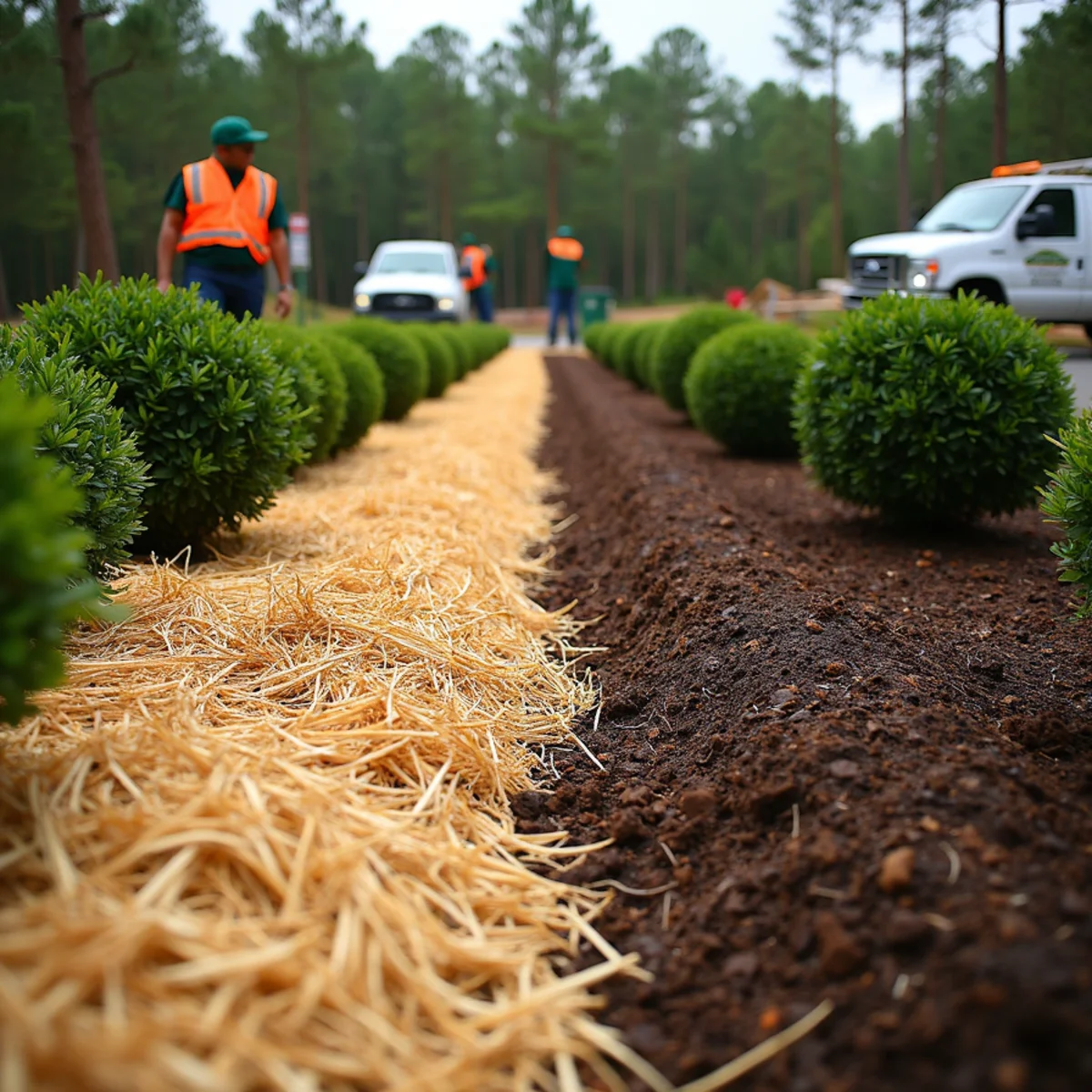
Walk through any established Central Alabama neighborhood and you will see the two great camps of bed cover side by side: rich brown hardwood mulch in some yards, golden longleaf pine straw in others. Both do the essential jobs of a bed cover, holding moisture, suppressing weeds, moderating soil temperature, and finishing a landscape, but they do those jobs differently, and one is often clearly better for a given bed.
This is one of those honest comparisons where the right answer depends on your slopes, your plants, your budget, and your maintenance habits. Here is how longleaf pine straw and hardwood mulch really compare for Alabama beds, so you can choose with confidence rather than by default.
The Case for Pine Straw
Pine straw, the fallen needles of longleaf and loblolly pines, is a Southern classic for good reasons beyond tradition. It is lightweight and easy to spread, breaks down slowly, and, importantly for our terrain, it knits together into a mat that resists washing away on slopes. That interlocking quality makes pine straw a strong choice for the sloped beds so common on Central Alabama's rolling, clay-heavy lots.
Pine straw also gently acidifies the soil as it decomposes, which suits the many acid-loving plants that thrive here, azaleas, camellias, hollies, and the like. It tends to cost less per area to install than hardwood mulch, though it breaks down and needs refreshing more often, which evens out over time.
- Strengths: excellent on slopes, knits into an erosion-resistant mat, lightweight, acidifies soil for acid-loving plants, lower upfront cost.
- Weaknesses: breaks down and thins faster, needs more frequent refreshing, can look less formal, lighter needles can blow in high wind before they settle.
The Case for Hardwood Mulch
Hardwood mulch, shredded bark and wood, brings a different set of strengths. It is heavier and denser, so it stays put well on flat and gently sloped beds and provides a thick, effective weed barrier. As it decomposes it adds organic matter to the soil, gradually improving even stubborn clay, which is a real long-term benefit in our region.
Many homeowners prefer its darker, more formal appearance, especially against brick and manicured landscapes. Hardwood mulch typically lasts longer than pine straw before needing a refresh, though it costs more per application. Its main weakness is slopes: on a steep bed, heavy rain can float and carry hardwood mulch downhill, exactly where pine straw would have held.
- Strengths: durable and long-lasting, excellent weed suppression, builds soil organic matter, formal appearance, stays put on flat beds.
- Weaknesses: washes and floats on slopes, higher upfront cost, heavier to move, can mat and repel water if piled too thick.
Choosing Based on Your Beds
Rather than declaring a universal winner, match the material to the bed:
- Sloped beds: pine straw usually wins because it knits together and resists erosion where hardwood floats away.
- Flat, formal front beds: hardwood mulch often looks sharper and stays neat longer.
- Acid-loving plants like azaleas and camellias: pine straw complements them naturally.
- Beds where you want to improve the soil over time: hardwood adds more organic matter as it breaks down.
- Large areas on a budget: pine straw covers more ground for less upfront.
Many of the properties we serve use both, pine straw on the sloped and naturalized beds, hardwood in the formal entry beds, which is a perfectly sound strategy. Our mulch installation and pine straw service can advise bed by bed rather than forcing one material across the whole property.
Application Mistakes to Avoid
Whichever you choose, how it is applied matters as much as which it is. Two mistakes are common and both harm plants:
Volcano Mulching
Piling mulch high against tree trunks and shrub stems, the so-called mulch volcano, traps moisture against the bark and invites rot and pests. Mulch should be pulled back a few inches from trunks and stems, spread as an even blanket, not a mound.
Too Thick or Too Thin
Too thin and weeds break through and moisture escapes; too thick and water cannot reach the roots and the layer can go anaerobic. A moderate, even depth refreshed as needed is the goal, and old, matted material should be loosened or removed rather than simply buried under a new load year after year. Refreshing is one of the tasks we fold into our seasonal spring and fall yard cleanups so beds start each season protected.
Protect Your Beds the Right Way
Longleaf pine straw and hardwood mulch are both excellent bed covers; the better one depends on your slopes, plants, and taste. Use pine straw where erosion and acid-lovers rule, hardwood where durability and a formal look matter, and often both across one property. Truvian Lawn Care installs and refreshes both throughout Deatsville, Wetumpka, and the River Region, matched bed by bed. Call (323) 606-0255 to freshen your landscape the right way.
Related from Truvian Lawn Care