Almost every hardscape conversation starts with the same question: what will it cost? It is a fair question, and it deserves an honest answer, which is that a retaining wall or paver patio does not have a single price. It has a range, and where your project lands in that range depends on factors specific to your lot, your soil, and what you want the finished space to do.
Rather than throw out a number that means nothing without context, this guide walks through the real drivers of cost so you can understand your estimate when you get one. Anyone who quotes a firm price over the phone without seeing your site is guessing, and on Central Alabama's red clay, guesses get expensive.
Why There Is No Flat Price
A paver patio on flat, well-drained ground is a very different job from the same patio on a slope that has to be excavated, retained, and drained. A two-foot decorative garden wall and a five-foot structural wall holding back a hillside share a name and almost nothing else. The materials, the base work, the labor hours, and the engineering all scale with the demands of the site.
Understanding the factors below lets you make smart choices, spend where it matters, and recognize a fair estimate when you see one.
What Drives Retaining Wall Cost
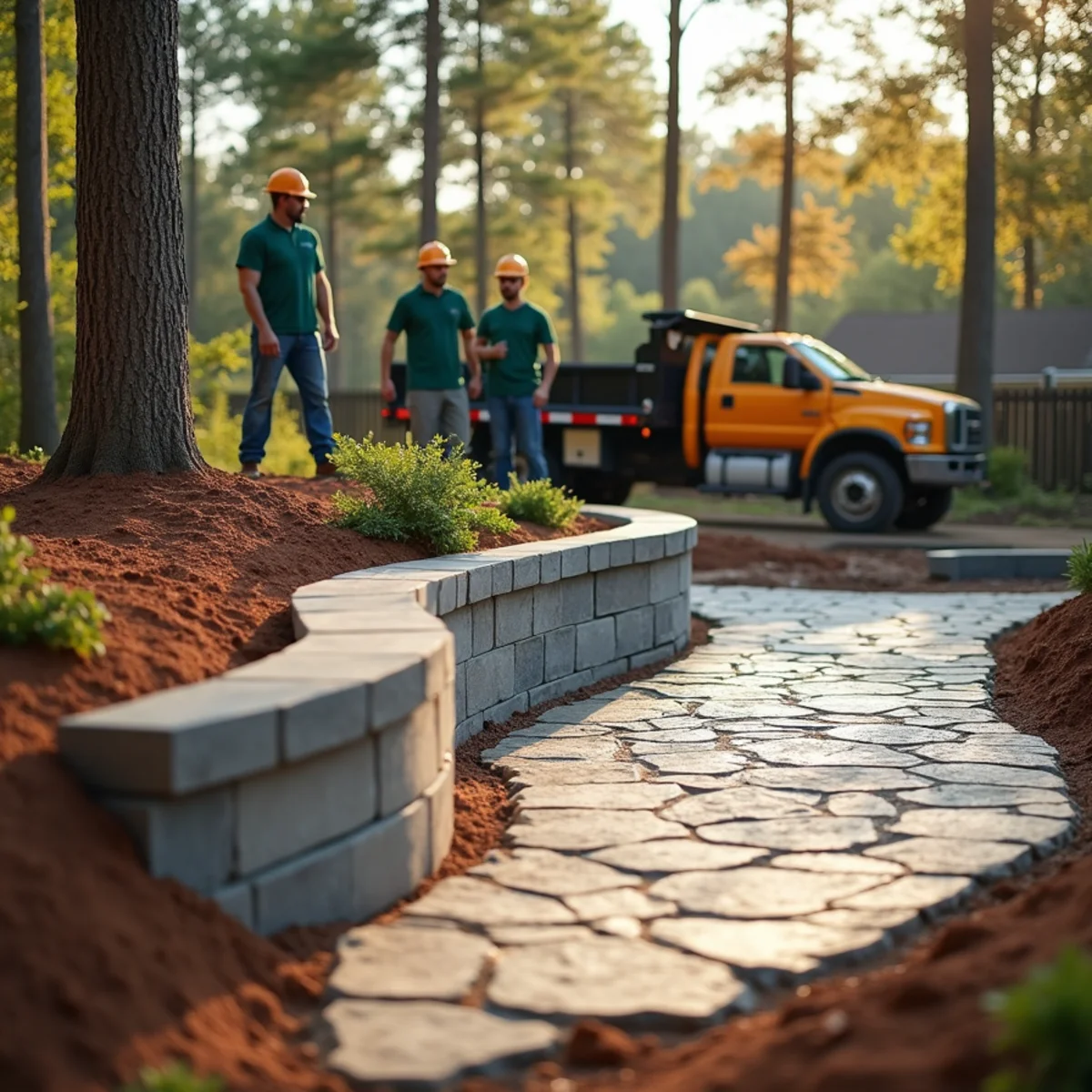
For our concrete retaining wall block projects, the biggest cost drivers are height, length, and what the wall is holding back:
- Height: taller walls carry far more soil pressure and often require deeper bases, reinforcement, or tiering, which drives cost up sharply above a few feet.
- Length and total square footage of wall face, which sets the material and labor volume.
- Base and excavation: on red clay, proper excavation and a compacted stone base are non-negotiable and represent real hours.
- Drainage behind the wall: gravel backfill, filter fabric, and drain pipe add cost but prevent the water pressure that destroys walls.
- Block type and finish: standard structural block versus premium architectural units changes the material price.
- Site access: a backyard a wheelbarrow can reach costs less than one that requires hauling material by hand a long distance.
The temptation to save money by skipping drainage or shortening the base is the single most expensive mistake a homeowner can make, because a failed wall costs more to rebuild than it would have cost to build correctly. We explain why in our detailed writing on stopping red clay erosion with block walls.
What Drives Paver Patio Cost
For our paver patios and walkways, the cost factors overlap with walls but add their own wrinkles:
- Total square footage of the finished surface.
- Base preparation: the excavation and compacted aggregate base is the hidden majority of a lasting patio, and it is where cheap installs cut corners.
- Paver selection: basic concrete pavers cost less than tumbled, permeable, or premium units.
- Pattern complexity: intricate herringbone or multi-color layouts and curved borders add labor.
- Grade and drainage: sloped or poorly draining sites need extra shaping and sometimes a drain to keep the patio from settling.
- Edge restraints, sand, and features like steps, seat walls, or a fire pit.
We go deep on why base work makes or breaks a patio in our guide to preventing paver settling on Alabama clay. It is the part you cannot see, and it is the part that determines whether your patio still looks level in ten years.
Planning Ranges, Not Promises
Homeowners planning a budget often want a ballpark, and that is reasonable for early planning as long as everyone understands these are ranges, not quotes. Related maintenance items give a sense of scale: routine services in our area run in modest per-visit ranges, while installed hardscape is a larger, one-time investment that varies with all the factors above. The only number that means anything for your project is a written estimate based on a site visit.
That is also why we offer free estimates. We would rather look at your actual grade, soil, and access than have you make a decision based on a stranger's project on the internet.
Where to Spend and Where to Save
If your budget is tight, the smart place to economize is the visible material, choosing a handsome standard paver over a premium one, for example. The wrong place to economize is the base and drainage. A beautiful patio on a poor base fails; a simple patio on an excellent base lasts for decades. The same logic governs walls: the block you see matters less than the base and drainage you do not.
Get a Real Estimate for Your Real Site
Retaining walls and paver patios are investments that reward doing them right, and the honest cost depends entirely on your specific lot. Truvian Lawn Care provides free, no-pressure estimates for hardscape projects across Wetumpka, Deatsville, and Central Alabama, and we will walk you through exactly what your site needs and why. Call (323) 606-0255 to schedule a look at your project.
Related from Truvian Lawn Care