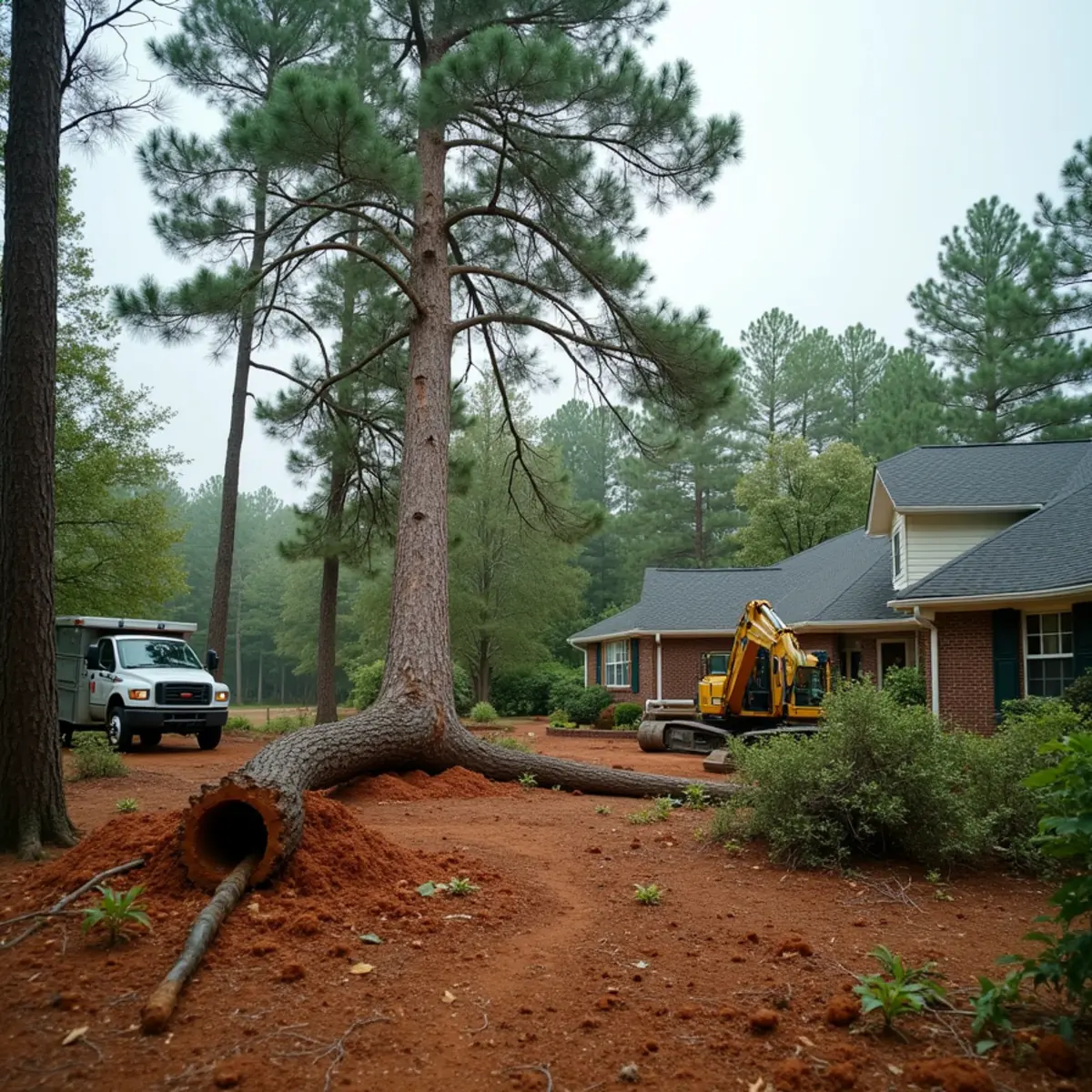
Spring and summer storms roll through the River Region with real force, and the tall loblolly and longleaf pines that shade so many Deatsville and Elmore County yards are often the first casualties. When a full-grown pine comes down, it rarely lands cleanly. It drapes across a roof, pins a fence, or leans against power lines with hundreds of pounds of stored tension still locked in the trunk. The first hour after that happens sets the tone for how safe, and how expensive, the cleanup becomes.
This guide walks you through what to do the moment a storm downs a pine on your property in Central Alabama. The goal is simple: protect people first, prevent the damage from getting worse, and set up a clean, safe removal. Some of these steps you can do yourself. Others are genuinely dangerous and belong to a trained crew with the right saws, rigging, and insurance.
Step One: Treat Every Downed Tree as a Live Hazard
The single most important thing to understand is that a fallen pine is not finished moving. Trunks under tension can spring, roll, or drop without warning, and root plates that heaved out of saturated red clay can settle back suddenly. Keep everyone, including pets, well clear of the tree and anything it is touching.
If the tree is anywhere near a power line, assume the line is live and that the ground around it may be energized. Do not approach, and do not try to move branches off a line yourself. Call your utility and 911, then keep bystanders at least the length of the tree away from any downed conductor.
- Get everyone out of any room the tree has struck; a compromised roof or ceiling can fail hours later.
- Do not walk under a leaning trunk or a limb hung up in other branches, known as a widow-maker.
- Keep vehicles and people away from the raised root plate, which can slam back into its hole.
- If you smell gas or see sparking, leave the house and call 911 from a safe distance.
Step Two: Document Before Anything Is Moved
Once people are safe, take photos and video from several angles before a single branch is cut. Capture the tree, the point of impact, and any interior damage. This record matters enormously if you file a homeowners claim, and it costs you nothing but two minutes. We cover the claims side in depth in our writing on how storm tree removal interacts with insurance, but the short version is that good documentation protects you.
Note the date, the weather, and whether the tree was healthy or already showing decline. If you had any prior concerns about the tree, a professional storm-vulnerability inspection record helps establish that you were maintaining your property responsibly.
Step Three: Stabilize, Do Not Repair
Your job in the first hours is to stop the situation from worsening, not to fix it. If rain is still coming and the roof is open, a tarp over the breach can save your ceilings and floors, but only if you can place it without climbing onto a damaged or wet roof. If that is not safe, wait. Water damage is cheaper to remedy than a fall from a roof.
- Shut off electricity to any affected part of the house if the panel is dry and safe to reach.
- Move undamaged belongings out from under compromised ceilings.
- Place buckets and towels to manage interior water, and photograph everything as you go.
- Rope off the hazard area in the yard so no one wanders into it in the dark.
Step Four: Know What You Should Never Cut Yourself
Every storm season, emergency rooms across Alabama see chainsaw injuries from homeowners trying to clear their own downed pines. The mechanics are unforgiving. A trunk resting on a roof is under compression on top and tension underneath; cut it wrong and it snaps toward you. A tree bent over and hung up carries spring energy that can whip a saw back in an instant.
Leave the following to a professional crew every single time:
- Any tree touching a structure, roof, vehicle, or fence.
- Any tree on or near a power line, guy wire, or service drop.
- Trunks that are bent, twisted, or hung up in other trees.
- Anything that would require you to climb, use a ladder, or work overhead.
Small limbs on the ground, well away from structures and lines, are reasonable to gather. Everything with weight, height, or tension on it is a job for our emergency fallen pine and tree removal team, who arrive with the rigging and cranes to take the load down in a controlled way.
Step Five: Call for a Rapid, Local Response
Because we dispatch from Deatsville, we can reach most of Elmore County quickly after a storm, and coordinate the broader cleanup, from hauling debris to grading the ruts a root plate leaves behind. When storms are widespread, our 24/7 severe storm and tornado cleanup crews prioritize situations where a tree threatens a home or blocks access for emergency vehicles.
When you call, have a few details ready: what the tree is resting on, whether power lines are involved, and whether anyone is hurt or trapped. That lets us send the right equipment the first time instead of making a second trip.
Get Help Fast and Stay Safe
A downed pine is frightening, but a calm, ordered response keeps a bad night from becoming a tragedy. Protect people, document the scene, stabilize what you safely can, and hand the dangerous cutting to a crew built for it. Truvian Lawn Care is licensed, insured, and based right here in Deatsville, ready to respond across Central Alabama. If a storm has put a tree on your home or blocked your property, call us now at (323) 606-0255 and we will get a crew moving.
Related from Truvian Lawn Care