A paver patio should stay flat and true for decades. So when a patio starts to dip in the middle, tilt toward the house, or develop lips between pavers you can catch a toe on, it is tempting to blame the pavers. The pavers are almost never the problem. The problem is underneath them, in a base that was built wrong for Central Alabama's saturated clay.
Understanding why patios settle is the key to never dealing with it, whether you are hiring an installer or evaluating one who left you with a sinking mess. This guide explains what a paver base actually does, why our clay soil is so unforgiving of shortcuts, and the base-preparation rules that keep a patio level for the long haul in Millbrook, Pike Road, and across the region.
A Patio Is Only as Good as What You Cannot See
The visible pavers are the last and least critical layer of a patio. Beneath them sits a thin setting bed of sand, and beneath that sits the layer that carries everything: a compacted aggregate base. That base is what spreads the load, resists movement, and, crucially, drains water away. When a patio fails, that base almost always failed first, because it was too thin, not compacted, or made of the wrong material.
Homeowners rarely ask about the base when getting bids, which is exactly how corner-cutting installers save money. They pocket the difference, the patio looks great for a season or two, and then Alabama's rain and clay do their work.
Why Alabama Clay Is So Hard on Patios
Red clay creates two specific problems for a patio base. First, clay expands when it absorbs water and contracts when it dries, and Central Alabama cycles through both constantly. That expansion and contraction heaves and drops whatever sits on top of it, and a patio built directly on clay rides that movement. Second, saturated clay loses strength and can deform under load, so a patio over wet clay settles into the soft spots.
The solution to both is the same: separate the patio from the clay with a thick, well-compacted, free-draining aggregate base, and get water out from under the patio so the clay beneath stays as stable as possible.
The Base Preparation Rules That Work
Our paver patio and walkway installation follows a set of non-negotiable base rules for clay soil:
- Excavate deep enough. On clay, the base needs to be thicker than on stable soil, so excavation goes well below the finished paver level.
- Use the right aggregate. Angular crushed stone that locks together and drains, not rounded gravel or stone dust alone.
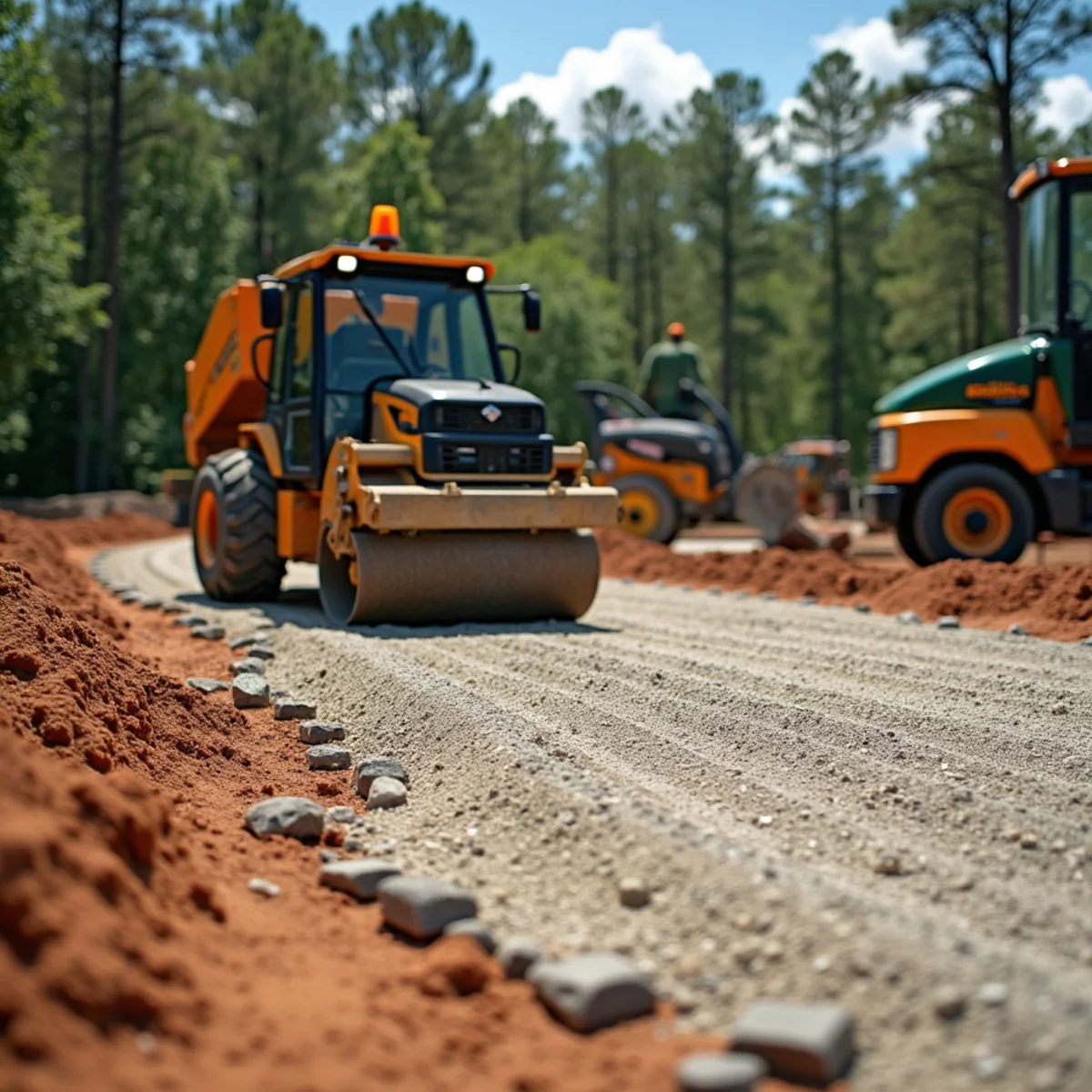
- Compact in lifts. The base is placed and compacted in several thin layers, not one deep dump, so every layer is truly solid.
- Establish drainage slope. The base and the finished surface must slope away from the house so water sheds instead of ponding.
- Use a proper setting bed. A correctly screeded sand or bedding layer of the right thickness, not a thick sand cushion that lets pavers wander.
- Lock the edges. Edge restraints hold the field of pavers together so they cannot spread and open joints.
Compaction Is Not Optional
The most common shortcut is skimping on compaction. Dumping base material and raking it smooth is not the same as compacting it in lifts with a plate compactor. Uncompacted base contains voids that collapse under load and traffic, and that collapse is exactly what shows up later as dips and low spots. Proper compaction is time and equipment, and it is the step that most separates a lasting patio from a failing one.
Managing Water Under the Patio
Because clay heaves and softens with water, keeping water away from the base is central to a patio's longevity. That starts with grading the surface to shed water and can extend to drainage around or beneath the patio on wet sites. On lots that already struggle with drainage, we sometimes integrate a patio with a french drain and catch basin system so water never pools under or against the finished surface. A patio and a drainage plan often belong together.
Can a Settling Patio Be Fixed?
Sometimes. A localized low spot can occasionally be lifted and reset if the underlying base was reasonable. But if the patio was built on an inadequate base, patching one dip only delays the next one, and the honest answer is often a rebuild of the base done correctly. This is why doing it right the first time is genuinely the economical choice; a proper install costs less than a cheap install plus its rebuild.
Build It Once, Build It Level
A paver patio that settles was almost always built on a base that could not handle Alabama clay. Deep excavation, the right aggregate, compaction in lifts, proper slope, and edge restraints are what keep a patio flat and true for decades. Truvian Lawn Care builds paver patios engineered for our soil across Millbrook, Pike Road, and Central Alabama. Call (323) 606-0255 for a free estimate that includes the base work others hide.
Related from Truvian Lawn Care